
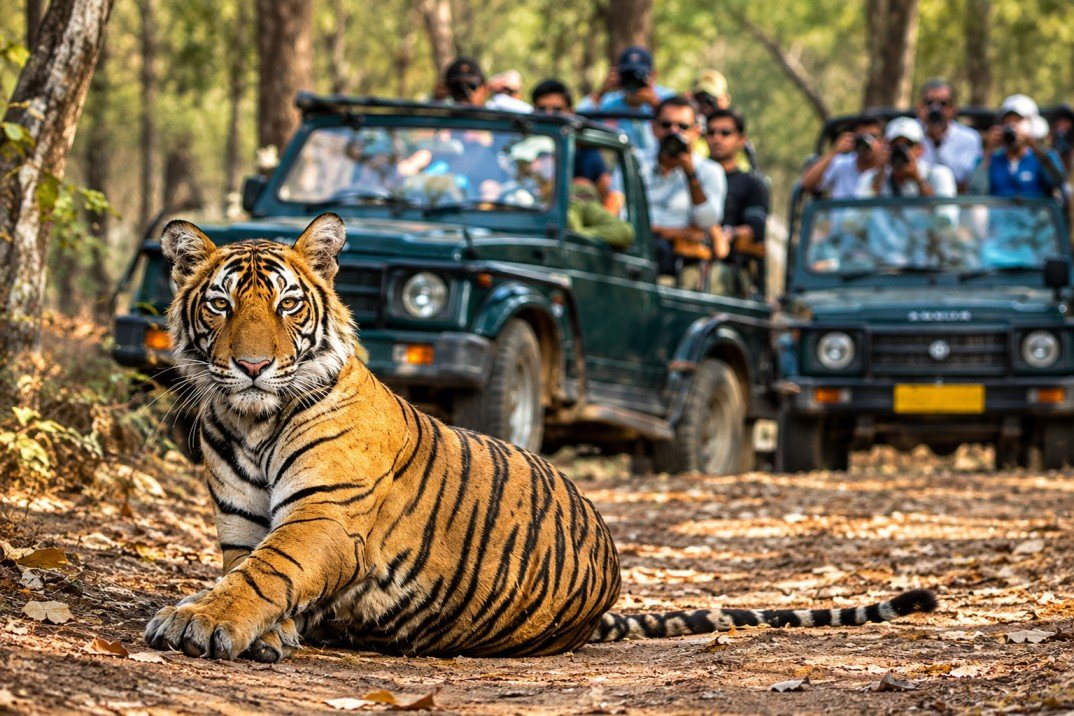
For many international travelers, seeing a wild tiger in India is a bucket-list moment they've imagined for years, long before they ever book a flight. But a tiger safari in India isn't quite like other wildlife experiences you may have done elsewhere. The parks work on permits, the vehicles are shared or private, and sightings depend on patience as much as luck.
If this is your first tiger safari in India, this guide walks you through exactly what to expect, from choosing the right reserve to what a typical safari morning actually looks like. It's written the way we'd explain it to a friend visiting for the first time, not a brochure. If you'd rather have it all planned for you, our Tiger Trails India itinerary is built specifically for first-timers who want a smooth, well-guided experience.
Why India Is a Great Place for Your First Tiger Safari
India is home to more than 70% of the world's wild tiger population, spread across over 50 tiger reserves. Unlike some destinations where sightings are rare and unpredictable, parks like Ranthambore, Bandhavgarh, and Kanha have healthy tiger densities, well-marked territories, and experienced naturalist guides who track movement patterns daily. This combination makes India one of the most reliable places in the world to see a wild tiger, even on a first attempt.
Choosing the Right Tiger Reserve for Your First Trip
Not all tiger reserves are equally suited for a first-time visitor. Some are easier to reach, better organized for tourists, and have higher sighting rates. Here are three reserves we consistently recommend to first-time international travelers.
Ranthambore National Park, Rajasthan
Closest to Delhi and Jaipur, Ranthambore is one of the best-organized tiger reserves in India for first-timers. It combines a good tiger population with dramatic ruins of an old fort inside the park, so even a safari with a quieter sighting still feels worthwhile. It also pairs naturally with a Golden Triangle trip if you're visiting Delhi, Agra, and Jaipur.
Bandhavgarh National Park, Madhya Pradesh
Often called India's tiger capital, Bandhavgarh National Park has one of the highest tiger densities in the country. It's a slightly longer journey from major cities, but the sighting probability makes it worth the extra travel time, especially if seeing a tiger is your top priority.
Kanha Tiger Reserve, Madhya Pradesh
Believed to have inspired Rudyard Kipling's 'The Jungle Book', Kanha Tiger Reserve offers wide meadows and sal forests, along with excellent chances of spotting tigers, barasingha deer, and other wildlife. It's a good option if you want a quieter park with fewer crowds than Ranthambore.
What to Expect During Your First Tiger Safari in India
Early Mornings and Fixed Timings
Safaris run in two fixed slots: a morning session starting around sunrise, and an afternoon session ending around sunset. Morning safaris tend to be cooler and see more animal movement, so most first-timers prefer them, even though it means an early wake-up call, often before 5:30 AM.
Permits and Zone Allotment
Every national park is divided into zones, and each safari vehicle is allotted a specific zone by the forest department, not chosen freely by tourists. This system exists to manage tourist pressure on the tigers, so don't be surprised if you can't pick your exact zone at the last minute. Booking in advance through a reliable operator usually gets you a better zone.
Jeep or Canter: Your Vehicle Options
You'll typically choose between an open 6-seater jeep or a larger 20-seater canter. Jeeps offer more personal space and flexibility, while canters are more budget-friendly for groups. Either way, the vehicles are open-top, so you'll want to dress for outdoor weather, not an enclosed vehicle.
What to Pack
● Neutral or earthy-toned clothing, avoid bright colours and white
● A light jacket or shawl for early morning safaris, even in warmer months
● Sunscreen, a cap, and sunglasses for the afternoon slot
● Binoculars and a zoom lens if you're into photography
● A valid passport or photo ID, required for entry at every gate
How to Plan Your Tiger Safari in India, Step by Step
● Decide which reserve fits your itinerary and travel dates best
● Book your safari permits at least 60-90 days ahead during peak season (October to June)
● Arrange a naturalist-led safari for better tracking and explanations along the way
● Combine two or three reserves if you have 7-10 days, to improve your overall sighting odds
● Keep a buffer day in your itinerary in case one safari doesn't go as planned
Common Mistakes First-Time Tiger Safari Travelers Make
A lot of first-timers plan just one safari and assume a tiger sighting is guaranteed. It isn't. Booking two to three safaris across your trip meaningfully improves your chances. Another common mistake is choosing a reserve based only on distance from the airport, without checking sighting frequency or the season you're travelling in. And finally, many travelers underestimate how early the mornings start, plan your previous night accordingly so you're not rushing at 5 AM.
Tips for a Smooth and Memorable Experience
● Stay quiet and avoid sudden movements once you're inside the park, tigers are sensitive to noise
● Trust your naturalist guide, they read pug marks, alarm calls, and behaviour patterns before you'll notice anything
● Keep your phone on silent; the moment a tiger appears is not the time for a ringtone
● Stay a few nights near the park rather than a rushed day trip, it gives you more safari attempts and less travel fatigue
Final Thoughts
Your first tiger safari in India will likely be unlike any wildlife experience you've had before, part patience, part adrenaline, and often, a genuinely emotional moment when you finally spot those stripes in the wild. Go in with realistic expectations, book with a reliable local team, and give yourself more than one safari attempt.
If you'd like help choosing the right park, dates, and stay for your first trip, get in touch with our travel experts, and we'll build a tiger safari itinerary suited to your travel dates, budget, and comfort level.