
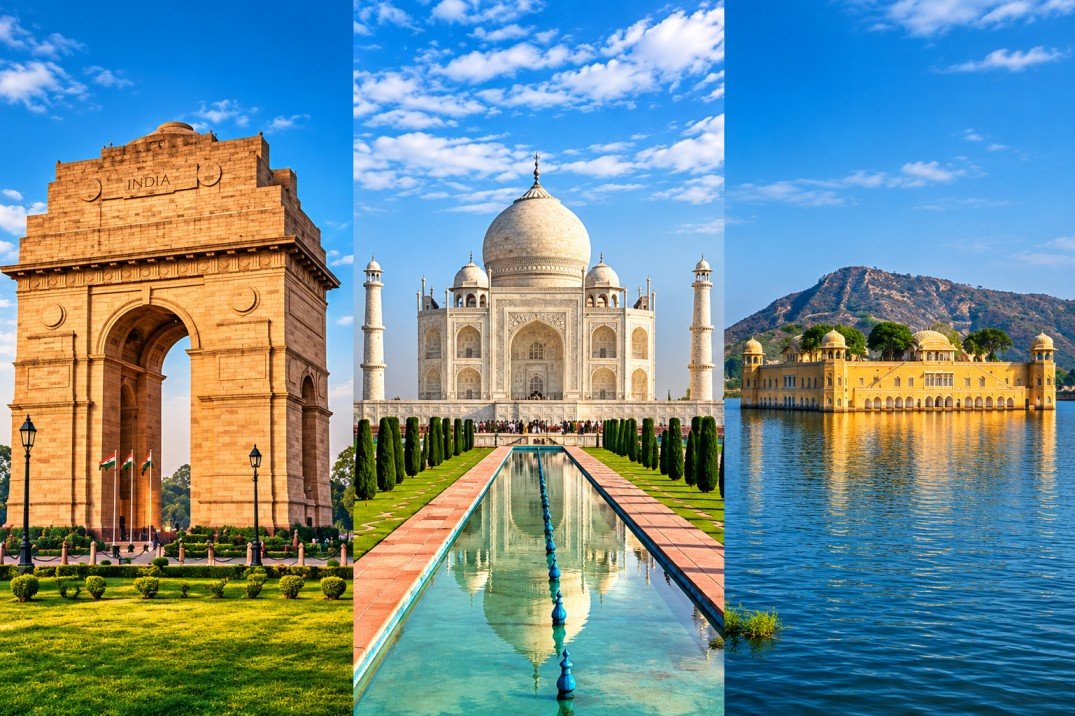
The Golden Triangle Tour, covering Delhi, Agra, and Jaipur, is one of India's most-travelled circuits, and for good reason. In under a week, you can walk through Mughal-era monuments, see the Taj Mahal at sunrise, and explore the pink-walled bazaars of Jaipur. But timing this trip right makes a real difference. Visit in the wrong season, and you'll spend more energy dealing with heat or haze than actually enjoying the sights.
This guide breaks down the best time to visit each city individually, along with what to expect month by month, so you can plan a Golden Triangle Tour that actually matches the weather, the crowds, and what you want to see.
Understanding the Golden Triangle Tour
Delhi, Agra, and Jaipur form a rough triangle across northern India, each about 200-250 km apart, making it easy to cover all three by road or a short train ride. Delhi gives you Mughal and colonial history alongside modern India, Agra is home to the Taj Mahal and Agra Fort, and Jaipur, the Pink City, offers forts, palaces, and Rajasthani culture. Since all three cities share a similar climate belt, the best time to visit tends to overlap, but there are small differences worth knowing.
Best Time to Visit Delhi
Delhi has three distinct seasons, and each changes the experience quite a bit.
Winter (October to March): The Best Window
This is, without question, the best time to visit Delhi. Days are pleasantly cool, usually between 10°C and 25°C, ideal for walking through Humayun's Tomb, Red Fort, and Qutub Minar without exhaustion. December and January can get foggy in the early mornings, especially affecting flight and train schedules, so build in a little buffer time if you're travelling during peak winter.
Summer (April to June): Best Avoided
Delhi summers are intense, temperatures regularly cross 40°C, and sightseeing outdoors becomes genuinely uncomfortable by mid-morning. If you must travel during this window, plan monuments for early morning or early evening and rest indoors during peak heat.
Monsoon (July to September): Green but Humid
Monsoon brings relief from the heat but adds humidity and occasional heavy showers. It's not the worst time to visit, monuments look lovely against grey skies, but outdoor plans need flexibility around sudden rain.
If you're spending a few extra days in the capital before or after your Golden Triangle circuit, our Delhi tour packages are built around these seasonal patterns to help you make the most of your time in the city.
Best Time to Visit Agra
Agra's climate closely mirrors Delhi's, since the two cities aren't far apart, but a few Agra-specific factors matter.
October to March: Ideal for the Taj Mahal
Cooler weather means you can comfortably visit the Taj Mahal at sunrise, widely considered the best time to see it, when the marble catches soft early light and crowds are thinner. Winter mornings can be misty, which actually adds a dreamy quality to early photographs, though it may briefly delay full visibility.
April to June: Hot but Quieter
Summer heat in Agra is sharp, but if you're travelling on a tighter budget or want fewer crowds at the Taj Mahal, an early morning visit during these months is still workable, just plan your day around the heat.
Monsoon Months: A Hidden Advantage
Few tourists visit Agra during monsoon, which means shorter queues and a calmer experience at major sites. The trade-off is unpredictable rain, so keep your day flexible.
Best Time to Visit Jaipur
Jaipur, being in Rajasthan, tends to run slightly warmer and drier than Delhi or Agra.
October to March: Peak Season for a Reason
This is when Jaipur is at its best, comfortable temperatures for exploring Amber Fort, City Palace, and Hawa Mahal, plus this window includes vibrant festivals like Diwali and the Jaipur Literature Festival in January, which add extra energy to the city.
April to June: Desert Heat
Jaipur summers are dry and very hot, often exceeding 40°C. Fort visits, especially Amber Fort's uphill walk, become tough in peak afternoon heat. If travelling now, stick to early mornings and evenings for outdoor sightseeing.
Monsoon (July to September): Scenic but Sporadic
Rajasthan's monsoon isn't as heavy as coastal India, but it does bring welcome greenery to the otherwise dry landscape, along with the colourful Teej festival celebrations in August.
If you'd like to extend your trip beyond the three cities, our Rajasthan tour packages cover Jaipur alongside other Rajasthan gems like Udaipur and Jodhpur, ideal if you have extra days after your Golden Triangle circuit.
Month-by-Month Snapshot for Your Delhi Agra Jaipur Tour
● October to February: The best overall window, cool weather, clear skies (barring occasional Delhi fog), and festival season
● March: Still pleasant, transitional weather, good for travellers wanting to avoid peak-season crowds
● April to June: Hot and dry, manageable only with an early-morning sightseeing plan
● July to September: Warm and humid with intermittent rain, fewer tourists and lower hotel rates
Tips for Planning Your Golden Triangle Tour
● Book Taj Mahal sunrise slots in advance during peak winter months, they sell out quickly
● Carry layers in December and January, mornings and evenings can get surprisingly cold
● Avoid the midday sun between 12 PM and 3 PM during summer visits
● Plan 6-7 days minimum to comfortably cover Delhi, Agra, and Jaipur without rushing
If you'd like to combine your trip with the mountains, a Golden Triangle with Kashmir itinerary is a popular extension for travellers who want both heritage and scenery in one trip.
Final Thoughts
If we had to pick one window for the entire Delhi Agra Jaipur tour, it would be October to March, the weather cooperates, festivals add colour to the trip, and sightseeing simply feels easier. That said, each season has its own character, and monsoon or shoulder-season travel can work well if you're comfortable with a little unpredictability in exchange for smaller crowds and better rates.
Not sure which month fits your travel plans best? Get in touch with our travel experts, and we'll help you build a Golden Triangle itinerary around the season, festivals, and pace that suit you.